
REPORT: Datagrid’s NZ Data Centre Moves to Implementation – ANZ Becomes Key Node in Global Digital Infrastructure
- Publisher : Venture Insights
- Publish Date : April 1, 2026
Executive Summary
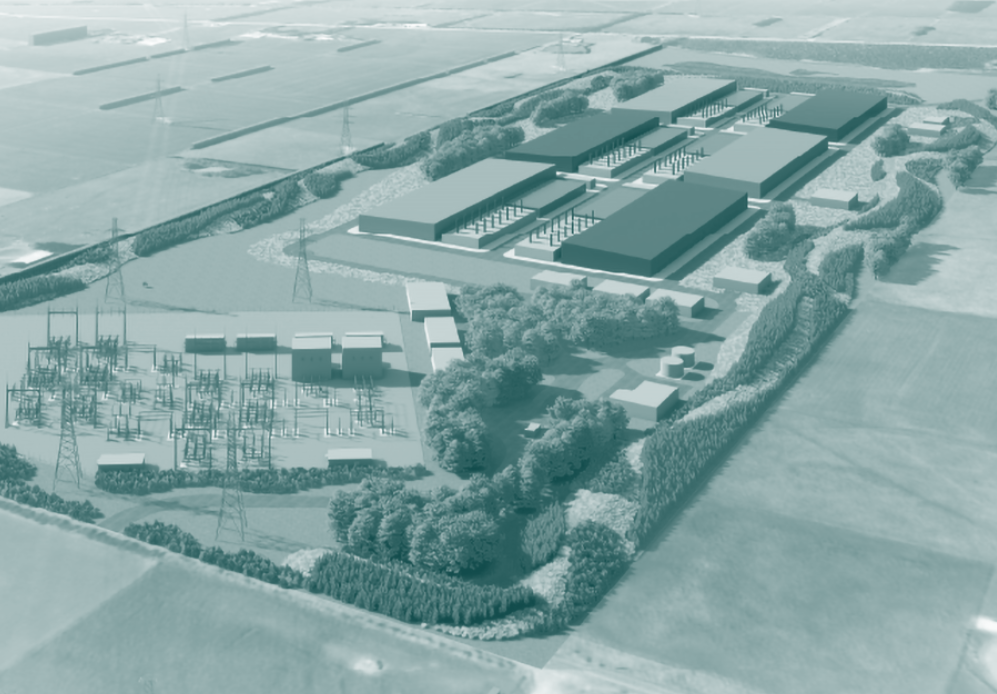
On March 11, 2026, Datagrid confirmed that it had received full resource consent from the Southland District Council, Environment Southland, and the Invercargill City Council for its hyperscale data centre. The Datagrid initiative and the associated Tasman Ring Network between Australia and New Zealand represent a watershed moment for New Zealand’s technological and economic trajectory.
By decoupling compute capacity from metropolitan end-user hubs, Datagrid is successfully exploiting the natural advantages of Southland – its cold air, its abundant water, and its renewable hydro power – to create a globally competitive “AI Factory.” The finalisation of the project’s resource approval last week finally allows the project to move from planning to construction.
The project therefore addresses the three most critical challenges facing the global digital economy: the need for massive, scalable power; the imperative for carbon neutrality; and the requirement for secure, diverse connectivity routes. The management team has now demonstrated the ability to secure the necessary regulatory clearances and local partnerships to realise this multi-billion dollar vision.
For New Zealand, the implications extend beyond the projected economic benefits. The project signals the nation’s arrival as a strategic transit hub in the Indo-Pacific, capable of integrating a massive-scale “AI Factory” in Southland with the “Great Southern Route” as a secure alternative to contested northern paths.
For regional markets like Australia and Singapore, Datagrid offers a vital relief valve for power-strained grids, facilitating a more resilient and sustainable regional digital ecosystem and challenging the assumptions that have driven data centre location.
Key Takeaways
- Full Regulatory Approval Secured: On March 11, 2026, Datagrid received full resource consent from Southland and Invercargill authorities, allowing the project to move from the planning phase into active construction. The project is steered by a veteran leadership team with deep roots in Amazon Web Services, Mercury NZ, and international telecom.
- Massive “AI Factory” Scale: The 280 MW campus is specifically designed as an “AI Factory” to handle the high-density GPU clusters required for intensive AI training and inference workloads. The facility will effectively double New Zealand’s current data processing capacity.
- Environmental and Cost Advantages: The project leverages Southland’s cold climate for “free cooling” and its proximity to hydroelectric generation to ensure a 100% renewable, carbon-neutral operation. This climatic strategy wil reduce cooling energy costs by at least 15% compared to warmer hubs like Sydney or Singapore.
- The Tasman Ring Connectivity: Datagrid is partnering with Chorus to build the 6,000-kilometre “Tasman Ring,” a high-capacity subsea cable linking New Zealand’s major cities with Sydney and Melbourne. Targeting a late 2027 launch, the cable will offer a massive 540 Tbps capacity and provide a southern Asian route that bypasses seismic and geopolitical risk zones.
- Strategic “Great Southern Route”: By routing data through politically stable New Zealand and Australia, Datagrid establishes a secure “Great Southern Route” as an alternative to contested paths in the South China Sea. This positions New Zealand (and Australia) as a “digital safe box” for critical global data storage and processing.
- Regional Economic Transformation: The construction phase is projected to create over 1,200 technical jobs in Southland. Research suggests this sector could unlock up to $70 billion in economic activity for New Zealand over the next decade.
- Relief Valve for APAC Grids: Datagrid offers “climatic arbitrage” for power-strained markets like Singapore and Australia by processing heavy AI workloads in Southland.
Progress to date: Architecting a Hyperscale Vision
The genesis and continued development of Datagrid require a network of international capital, strategic partnerships, and a leadership team with a demonstrated pedigree in disruptive telecommunications infrastructure. Understanding the management and funding of Datagrid requires an examination of the transition from its initial incubation under Singapore-based maritime giants to its current status as a founder-led, locally-aligned enterprise.
Executive Leadership and Domain Expertise
The management structure of Datagrid reflects a strategic synthesis of subsea engineering, cloud architecture, and high-voltage energy management. The company was founded in 2021 by Rémi Galasso, a technology entrepreneur whose track record includes the development of the Hawaiki Submarine Cable, the first independent trans-Pacific system to challenge the established carrier oligopoly.
Galasso’s role as CEO and Chairman is supplemented by a cadre of experts whose backgrounds in digital infrastructure management that align with the technical complexities of hyperscale development.
Benjamin Black, the Head of Technology, brings a high level of technical authority. Having co-authored the original internal paper at Amazon Web Services that proposed the cloud infrastructure model, Black’s presence indicates that Datagrid’s architectural philosophy is rooted in the requirements of the world’s largest hyperscalers. This is complemented by Vince Hawksworth, the Head of Power, who recently retired as CEO of Mercury NZ. Hawksworth’s experience in managing major renewable energy assets, such as the Turitea Wind Farm, is critical for a project that aims to become the second-largest power consumer in New Zealand.

The financial trajectory of Datagrid has transitioned through several critical phases, reflecting the evolving appetite of international investors for New Zealand’s “green compute” potential. Initially, Datagrid was established with the backing of BW Digital, a subsidiary of the Singaporean shipping and infrastructure conglomerate BW Group. The finalisation of BW Digital’s acquisition of the Hawaiki Submarine Cable in 2022 provided the initial synergy between international connectivity and local storage.
However, in a significant shift of control in 2025, shareholder DG Founders General Partner Pte. Ltd. moved to acquire BW Digital’s interests in the Datagrid New Zealand Limited Partnership. The transaction facilitates a more focussed strategic control while maintaining the corporate agility required to manage a project now estimated to cost $3.4 billion.
The project’s early milestones included the acquisition of a 43-hectare site in North Makarewa in late 2021, a move that was facilitated by government agency NZTE Investment. In 2025, New Zealand Overseas Investment Office (OIO) approved the purchase of a further 10 hectares of land in Makarewa and Lorneville, intended for access road construction to support the expanding campus. This ongoing capital injection underscores the transition of Datagrid from a speculative venture to high-value infrastructure.
Strategic Framework: “AI Factory” and Global Export Model
Datagrid’s strategy is predicated on the recognition that traditional data centre models are insufficient for the next generation of compute. The company has explicitly positioned its Southland facility as an “AI Factory” – a purpose-built hyperscale campus optimised for high-density GPU clusters required for AI training, inference, and high-performance computing (HPC) workloads.
The scale of this ambition is historic in the New Zealand context. While most existing domestic data centres operate with capacities below 20 MW, Datagrid’s 280 MW campus will effectively double the nation’s data processing capability when complete. Venture Insights expects Datagrid to be New Zealand’s biggest data centre capacity provider soon after FY30. This capacity is intended to serve a diverse range of tenants, from government agencies to hyperscale cloud regions, and specifically the “American hyperscalers” who are aggressively seeking new locations for massive compute deployments.
The Renewable Energy and Climatic Strategy
The most distinctive component of the Datagrid strategy is the leveraging of Southland’s unique environmental profile to achieve a competitive cost advantage. This strategy rests on three pillars: renewable energy access, climatic efficiency, and grid integration.
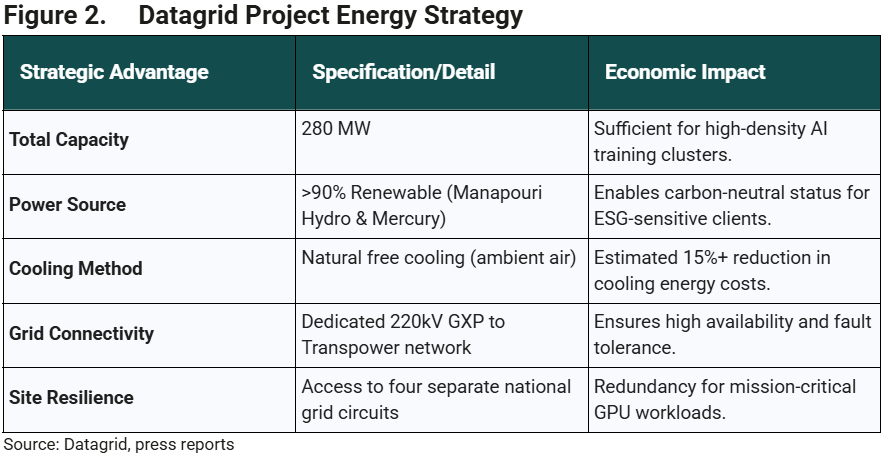
The facility’s proximity to the Manapouri hydroelectric station – which provides over 800 MW of renewable power – is a primary strategic asset. By securing a renewable baseload, Datagrid can offer a carbon-neutral compute environment, an essential requirement for US tech giants committed to net-zero targets.
Datagrid backed this ambition in March 2026 with a 15-year, 140MW Power Purchase Option Agreement (PPOA) with Mercury, a New Zealand-based power producer. Mercury generates 100% renewable energy. This will provide Datagrid with several years of energy security.
Furthermore, Southland’s annual average temperature of 9.8°C to 10°C allows for “free cooling,” where ambient air is used to dissipate heat from high-density server racks. This approach is estimated to make the data centre at least 15% more power-efficient than facilities in warmer hubs like Sydney or Singapore, significantly lowering the Power Usage Effectiveness (PUE) ratio and reducing operational expenditure.
International Market Expansion and the “Great Southern Route”
Datagrid’s vision extends far beyond domestic data sovereignty. The company aims to reposition New Zealand as the “Iceland of the Southern Hemisphere” – a provider of green data processing and storage services to the global market. This involves transitioning from serving local traffic to becoming a strategic transit point for data flowing between the Americas, the Asia-Pacific, and the Middle East.
Rémi Galasso has characterised this shift as the emergence of the “Great Southern Route”. In an era of heightened geopolitical tension, traditional subsea routes through the South China Sea and the Malacca Strait are increasingly viewed as congested and vulnerable. By routing traffic through the politically stable waters of New Zealand and Australia, the Great Southern Route offers a secure alternative that safeguards global data flows. Datagrid’s strategy is to capture “latency-tolerant” workloads – such as AI model training – that can be processed in Southland and then transmitted back to global markets via high-capacity subsea links.
The Tasman Ring Project: The Connectivity Catalyst
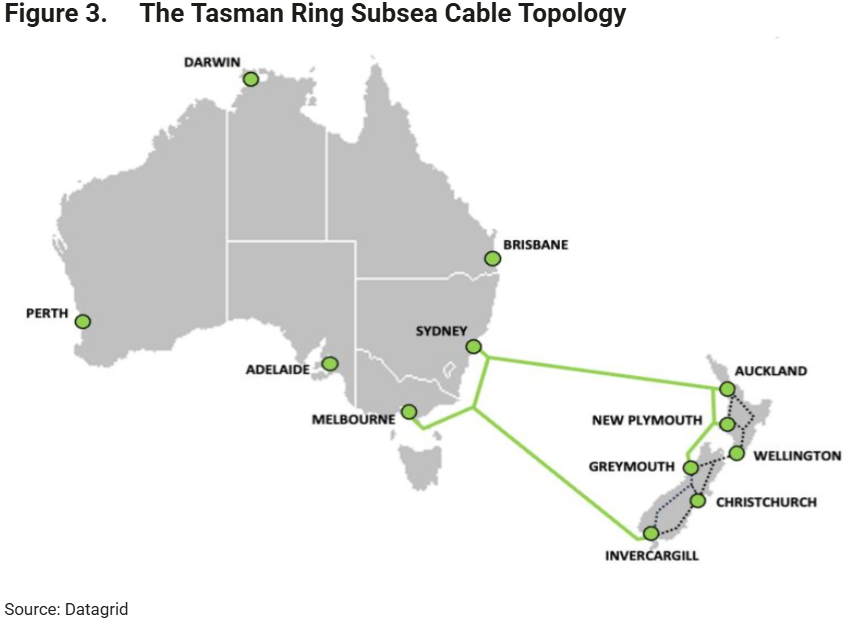
The Tasman Ring project is the critical infrastructure component that transforms the Southland campus from a local facility into a global hub. Jointly developed by Datagrid and Chorus NZ Limited, the Tasman Ring is a 6,000-kilometre trans-Tasman subsea cable system designed to link New Zealand’s major cities with the compute and interconnection hubs of Sydney and Melbourne.
Technical Parameters and System Resilience
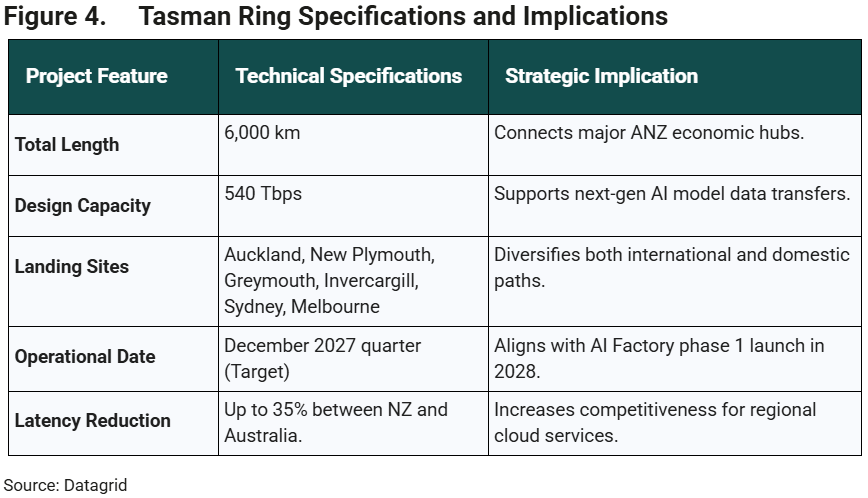
The Tasman Ring is the first dedicated high-fibre-count submarine cable connecting New Zealand and Australia, with an anticipated design capacity of up to 540 terabits per second (Tbps). This massive bandwidth is necessary to support the data-intensive operations of LLMs and high-performance cloud regions.
A primary strategic feature of the Tasman Ring is its domestic route architecture. In addition to Australian links, the system incorporates a domestic connection between Auckland, New Plymouth, Greymouth, and Invercargill. By establishing a western route that bypasses the high-risk Wellington fault zone, the Tasman Ring provides New Zealand with higher digital resilience, as the ring topology provides alternate routes.
For the South Island specifically, the landing at Oreti Beach next to Invercargill represents the first direct international fibre connection, removing the latency bottleneck created by having to backhaul traffic to Auckland.
A desktop study is currently underway for a further link to Tasmania. Tasmania enjoys similar climatic advantages as the South Island, has access to renewable energy, and also has ambitions to attract data centre investment.
Synergy with Datagrid’s Broader Strategy
The Tasman Ring complements the Datagrid “AI Factory” by providing the necessary low-latency paths to Australia’s East Coast and the wider APAC region. A Desktop Study (DTS) completed in August 2025 validated that the route between Invercargill, Melbourne, and Sydney offers the lowest latency possible for the South Island. This connectivity allows Datagrid to effectively compete for Australian workloads, as data can be processed in Southland using cheap, renewable energy and then delivered back to Australian end-users with a latency reduction of as much as 35 per cent.
The Tasman Ring also integrates with existing and planned systems like Hawaiki and Hawaiki Nui, creating a multi-layered redundancy network that links Singapore, Indonesia, Australia, New Zealand, and the United States. This layered architecture is what enables the “load shifting” strategy, where non-latency-critical AI processing is offloaded to the Southland campus.
Project Timelines and Regulatory Milestones
The Datagrid project has moved through a series of complex regulatory hurdles, culminating in a major announcement in March 2026 regarding the granting of full resource consents. This milestone marks the transition from pre-development planning to active construction.
The March 2026 Resource Approval
On March 11, 2026, Datagrid confirmed that it had received full resource consent from the Southland District Council, Environment Southland, and the Invercargill City Council. These approvals cover the 78,000 square metre hyperscale campus in Makarewa and the subsea cable landing at Oreti Beach. The granting of these consents is a significant regulatory achievement, as it involves addressing land use, environmental sustainability, and the massive electrical load requirements of the dedicated grid exit point.
This approval follows several years of collaboration with local traditional landowners (the four Southland Papatipu Rūnanga), other landowners, and the Southland Mayoral Forum. Broad community support and regulatory clearance provide the project with the stability required to finalise procurement and construction contracts.
Projected Development Schedule
While the project has evolved in scope, the following timeline represents the current trajectory for operational readiness:
- 2021-2022: Land acquisition and OIO approvals for the North Makarewa site.
- 2024: Commencement of the Tasman Ring project partnership with Chorus.
- August 2025: Completion of the Tasman Ring Desktop Study (DTS) by EGS Survey.
- March 2026: Full resource consent granted for the AI Factory and subsea cable landing.
- Q4 2027: Targeted completion and service-ready status for the Tasman Ring Network.
- 2028: Anticipated opening of the first phase of the $3.5 billion data centre campus.
- 2028-2035: Expansion to reach full 280 MW capacity in response to hyperscale demand.
Implications for New Zealand’s Digital Economy
The Datagrid project is not merely an infrastructure development; it is a catalyst for the “decentralisation” of New Zealand’s digital capacity and a driver of high-value economic growth. The implications for the domestic economy are profound, ranging from job creation to the emergence of a new export sector.
Economic Transformation and Job Creation
The construction phase of the Datagrid project is expected to create over 1,200 skilled and technical jobs in the Southland region. Once operational, the facility will provide at least 25 permanent roles, but the broader impact lies in the establishment of Southland as a digital infrastructure hub. The project represents a significant diversification of the regional economy away from primary industries.
Furthermore, the University of Otago has signed a strategic agreement to become an anchor tenant. This partnership will allow researchers to stay at the forefront of data-intensive fields such as genomics, MRI processing, and environmental sensor monitoring. By providing “world-leading” compute capacity “next door” to researchers, Datagrid supports the growth of New Zealand’s knowledge-intensive service sector, widely acknowledged as crucial to New Zealand’s economic prospects.
New Zealand as a Digital “Safe Box”
The geopolitical stability and geographic isolation of New Zealand are increasingly being marketed as strategic assets. As global data flows face risks from conflict and instability in traditional hubs, New Zealand offers a “digital safe box” – a secure, politically neutral environment for the storage of critical information. This positioning is vital for attracting investment from the “Five Eyes” partners and other Western tech firms seeking to diversify their global footprint.
The Boston Consulting Group (BCG) suggests that New Zealand is well-placed to win a share of the global data centre market, which could unlock up to $70 billion of economic activity over the next decade. Datagrid is the primary vehicle for this opportunity, effectively creating a “new high-value export industry” where the “export” is the processing of international data using New Zealand’s renewable energy and cool climate.
Implications for Regional Markets: Australia and Singapore
The development of Datagrid has significant consequences for big data centre markets in the Asia-Pacific region – primarily Australia and Singapore – which currently serve as the dominant data centre hubs but face increasing operational pressures.
Power and Cooling Arbitrage in the APAC Region
Major data centre hubs in Australia and Singapore are currently grappling with grid strain and the challenges of decarbonising their energy supply. In Singapore, land and power constraints have historically led to moratoriums on new developments, while in Australia, rising temperatures and urban land costs are driving up construction and cooling expenses.
New Zealand offers a “power-first” solution to these challenges. By locating energy-intensive AI training workloads in Southland, companies can exploit “climatic arbitrage” – performing the heavy compute in a cool, renewable-rich environment and transmitting only the final models or inference results back to end-users in Sydney or Singapore. This integrated market approach allows Australia and New Zealand to share data centre loads, strengthening communications security and data centre diversity across both markets.
Competitive Positioning and Market Growth
According to the Turner & Townsend 2025 Data Center Cost Index, developing a data centre in New Zealand costs approximately $12.3 per watt, which is higher than some APAC peers like Indonesia or Australia. However, this number is currently dominated by the congested Auckland market, not Invergargill. More importantly, the long-term operational savings from renewable energy and free cooling in the Southland provide a lower Total Cost of Ownership (TCO) for large-scale operators.
Venture Insights estimates that the New Zealand data centre market is estimated to grow at a 22.5% CAGR from FY25 to FY30, driven by government cloud-first mandates and the entry of hyperscale providers like Datagrid. Australia is projected to grow more slowly than New Zealand at a CAGR of 20.2%. This indicates that New Zealand is successfully repositioning itself not just as a consumer of global digital services, but as an infrastructure provider for the region.
Why This Matters: Globalised Architecture for the AI Revolution
For decades, the data centre industry has prioritised geographic proximity to end-users to minimise latency. However, the unique demands of generative artificial intelligence training and massive-scale inference workloads are shifting the competitive locus toward power availability, renewable energy integration, and climatic efficiency. Added to this are rising geopolitical risks, evidenced by current hostilities in the Middle East. Access to energy resources is not enough – geopolitical stability is also important.
This will lead to a redistribution of data centre investment that both New Zealand is well-placed to exploit.
For New Zealand, the implications extend beyond the projected economic benefits. The project signals the nation’s arrival as a strategic transit hub in the Indo-Pacific, capable of integrating a massive-scale “AI Factory” in Southland with the “Great Southern Route” as a secure alternative to contested northern paths. This will redefine New Zealand’s role from a peripheral edge market to a critical transit hub for the Indo-Pacific region.
For regional markets like Australia and Singapore, Datagrid offers a potential relief valve for power-strained grids, facilitating a more resilient and sustainable regional digital ecosystem. As construction begins following the March 2026 resource approval, Datagrid is challenging the assumptions that have driven data centre location, proving that the corners of the globe can become vital nodes of the global digital infrastructure.
About Venture Insights
Venture Insights is an independent company providing research services to companies across the media, telco and tech sectors in Australia, New Zealand, and Europe.
For more information go to ventureinsights.com.au or contact us at contact@ventureinsights.com.au.